What Is Agentic AI? The Plain-English Guide Behind the Buzzword
Agentic AI is the buzzword vendors are using for AI that can plan, use tools, and move a workflow forward. This guide strips out the hype, shows what works today with OpenClaw, and explains where approval gates belong.
Agentic AI is the phrase every vendor pitch, keynote, and LinkedIn post suddenly leans on. Some of it is real. A lot of it is a chatbot with better branding. This guide answers what is agentic AI in plain English, shows how agentic workflows actually run, and explains how to get the real thing working privately, with you still in charge.
Agentic AI is AI designed to pursue a goal across multiple steps: it plans, uses tools, checks results, remembers context, and adjusts its next move. In plain English, it is the shift from AI that answers prompts to AI that helps finish real work, ideally with human approval gates before anything sensitive happens.
What Is Agentic AI? The 60-Second Plain-English Answer#
Here is the one-sentence version. Agentic AI does not just answer your question, it works toward your goal. You hand it an outcome, like prepare my morning briefing or triage my inbox, and it figures out the steps, uses the tools it is allowed to use, and keeps going until the job is done or a checkpoint stops it.
The serious definitions agree on this shape. Stanford HAI describes it in terms of goals, planning, tool use, decisions based on feedback, and adaptation over time. AWS defines it as an autonomous AI system that can act independently to achieve predetermined goals. Different vendors, same core: goals, plans, tools, action.
One thing worth getting right early: agentic AI is not a single model or product. It is a system behavior, a design pattern. A language model on its own is not agentic. A language model wired to your calendar, inbox, and documents, with a plan loop and rules about what it may touch, starts to be.
The litmus test is simple. After the first response, can the system make progress on its own? If it can take the next useful step without you prompting every click, you are looking at agentic behavior. If it just waits for your next message, it is a chatbot, whatever the sales deck says.
And a safety frame worth adopting from day one: more agency should always come with clearer permissions, better logs, and approval gates. The rest of this guide walks the full loop, goal, plan, tools, feedback, memory, iteration, and escalation, and shows where the guardrails belong.
Agentic AI Meaning in Plain English#
The agentic AI meaning comes down to one word: agency. Agency inside boundaries. The system can act toward a goal using the tools you allow, in the places you allow, at the pace you allow. That is it. No consciousness, no intent, no judgment you can outsource your accountability to. Cambridge Dictionary puts the distinction plainly: these systems differ from traditional generative tools because they have the autonomy and reasoning ability to act independently toward a goal.
A phrase that makes it stick: agentic AI is AI with a job, tools, and rules. The job is the goal. The tools are the systems it can operate. The rules are the permissions and approval gates that keep it useful instead of dangerous.
The useful evaluation question is never whether the AI sounds smart. It is what outcome the system can actually move forward, and what happens when it gets something wrong. The safest agentic systems share three traits: they are constrained, observable, and interruptible. You can limit them, watch them, and stop them. Keep those three words handy. They will do more for you than any benchmark chart.
Agentic AI vs Generative AI vs AI Agent vs Chatbot#
These four terms get blended into one marketing smoothie, and the confusion is expensive. They describe different layers of the same stack. A chatbot is the conversation interface. Generative AI is the content engine underneath, the thing that creates text, code, images, and summaries. An AI agent is the software actor that can perform steps, call tools, and manage state. Agentic AI describes the overall behavior: goal-directed planning, action, feedback, and iteration.
Red Hat draws the line cleanly: an AI agent is a software entity, a noun, while the agentic label describes how a system behaves. If you want the full noun definition, with examples and the agent-versus-chatbot test, read What Is an AI Agent? That post covers the actor. This one covers the paradigm.
| Concept | Plain-English role | What it does | What it should not do alone | Simple example |
|---|---|---|---|---|
| Chatbot | The conversation window | Answers questions turn by turn | Take actions in your systems | Explains your refund policy |
| Generative AI | The content engine | Creates text, code, images, summaries | Decide what happens next | Drafts the refund email |
| AI agent | The software actor | Performs steps, calls tools, tracks state | Act without permissions and logs | Checks the order and prepares the refund |
| Agentic AI | The overall behavior | Plans, acts, checks, and iterates toward a goal | Run without approval gates on risky steps | Runs the whole refund workflow, pausing for sign-off |
On the agentic AI vs generative AI question specifically, IBM frames it well: generative AI creates content, while an agentic system applies generative outputs toward specific goals and can call external tools to get there. The memorable version: generative AI makes the draft, agentic AI moves the workflow.
How Agentic AI Works: Goal, Plan, Tools, Memory, Iterate, Approval Gates#
Under the hood, agentic AI runs a loop. Twilio describes it as perception, reasoning, planning, and action. Here is the same loop in operator terms, the way you would actually see it run.
It starts with a defined goal. Not "be helpful" but something bounded: prepare my morning briefing, triage priority inbox items, summarize this week's client threads. The system turns that goal into a plan, breaking it into smaller steps it can actually execute.
Then come the tools. Email, calendar, documents, CRM, task managers, browser actions, APIs. Tools are what separate an agentic system from a very confident text generator. Each tool call produces a result, and the system checks that result against the goal. If the first attempt fails, it adjusts and tries a different step instead of handing you an error and going quiet.
Memory keeps the system from starting at zero every time. It can hold your preferences, past decisions, and task state. But memory should be scoped and reviewable, because whatever it remembers shapes everything it does next.
The last piece is the one that makes this safe for real work: approval gates. A gate pauses the loop before a risky action happens, instead of letting you clean up after the damage. Drafting an email is free. Sending it waits for you. That single design choice is the difference between a system you demo and a system you trust.
Agentic Workflows vs Traditional Automation#
Once you understand the loop, the next question is how it becomes repeatable business process. The answer is agentic workflows, and it helps to see how they differ from the automation you already know.
Traditional automation follows fixed rules. If this, then that. It is cheap and reliable right up until the input does not match the rule, at which point it breaks silently or does the wrong thing confidently. Agentic workflows can interpret context, choose a branch, loop through a task, and escalate to a human when they hit uncertainty. Mastra defines an agentic workflow as a multi-step, dynamic process where AI agents make decisions, call tools, and coordinate tasks inside a structured execution graph, and notes that these workflows can branch, loop, pause for human approval, and resume without losing state.
| Workflow style | Trigger | Decision logic | Best use | Risk control |
|---|---|---|---|---|
| Simple automation | A fixed event | Rules set in advance | Predictable, repeated tasks | Spot-check the outputs |
| RPA-style process | A defined pipeline | Scripted steps, no judgment | High-volume structured data work | Monitoring and exception queues |
| Agentic workflow | A goal or schedule | Chooses branches at runtime | Judgment-heavy, variable work | Permissions, logs, approval gates |
Two things stop agentic workflows from becoming free-roaming bots. First, the best ones run inside structured paths with clear boundaries: deterministic steps for the predictable parts, agentic steps only where judgment is genuinely needed. Second, logs, state, and approval gates. Those three turn an impressive demo into a business process you can audit. Without them you do not have a workflow, you have a liability with a progress bar.
Agentic AI Examples: OpenClaw Workflows You Can Picture#
Enterprise hypotheticals do not help you picture Monday morning. So here are agentic AI examples drawn from the kind of OpenClaw workflows real people run, each framed the same way: goal, tools, memory, action, approval, log.

The morning briefing
Goal: one prioritized start to the day. The workflow gathers calendar events, urgent tasks, key emails, and priority notes, then delivers a single summary before your first meeting. Nothing here needs approval because nothing leaves your system. It reads, assembles, and reports.
Inbox triage
Goal: an inbox that sorts itself. Incoming messages get classified, urgent items get flagged, and routine ones get draft replies. The approval gate does the heavy lifting: every draft waits for your sign-off before anything is sent. You review in minutes what used to eat an hour.
Research digests
Goal: a decision brief you can check. The workflow collects sources, summarizes findings, compares claims, and saves links. Crucially, it flags uncertainty instead of hiding it. A research digest that admits what it does not know is worth ten that sound authoritative.
Follow-ups
Goal: nothing falls through the cracks. The workflow reads meeting notes or CRM updates, drafts next-step messages, and schedules reminders. External outreach pauses at the gate. Your clients hear from you, not from an unsupervised robot with your signature.
The range goes well past office work. OpenClaw's showcase includes a job-search agent, Todoist automation through Telegram, and even air purifier control. For a much longer menu, browse the 50 best OpenClaw use cases. The pattern to notice in every one of these agentic AI examples: bounded goal, scoped tools, human approval where it counts.
Approval Gates: The Safety Layer Agentic AI Needs#
Approval gates are not friction for the sake of friction. They are how you keep control while still getting the leverage. The whole point of an agentic system is that it acts, and anything that acts needs a pause button placed before the consequences, not after.
This is standard practice, not paranoia. AWS notes that some agentic AI actions are gated by human-in-the-loop systems where humans verify and approve actions before they happen. And Zapier's enterprise survey found human-in-the-loop was the most common AI-agent management approach heading into 2026, at 38%. The people running these systems at scale chose oversight.
The working rule is tiered autonomy. Let the system draft freely, recommend confidently, and act only when the risk is low or a human has approved. And every approval should leave a trail: what was proposed, who approved it, and what happened next. When something goes sideways, that log is the difference between a five-minute fix and a forensic mystery.
Hype vs Reality: What Agentic AI Cannot Do Yet#
Now the part most vendor decks skip. Agentic AI cannot guarantee truth. It still needs source checking, confidence signals, and human review on claims that matter. It cannot replace strategy, legal judgment, security ownership, or executive accountability. And it cannot fix broken data, unclear processes, or vague goals. Point it at a mess and you get a faster mess.
The market data backs up the caution. Gartner predicted that over 40% of agentic AI projects will be canceled by the end of 2027, citing escalating costs, unclear business value, and inadequate risk controls. Forrester reported that three-quarters of enterprise leaders say they are adopting agentic AI while noting a real gap between promise and payoff, and its 2026 security survey found 49% of security decision-makers named agentic AI as a concern.
Failure modes are predictable: tools change under the system, permissions are too broad, context is missing, or the task has no clear success criteria. The wins are just as predictable. They come from frequent, bounded workflows where a draft, a summary, a route, or a recommendation saves time immediately.
| Vendor claim | What is real today | What can break | Safer first workflow |
|---|---|---|---|
| Autonomous business operator | Bounded multi-step workflows with oversight | Broad permissions plus vague goals | Morning briefing from your real calendar and inbox |
| Self-improving assistant | Memory and instructions you tune over time | Unreviewed memory drifting off course | Weekly log review with instruction updates |
| No human review needed | Human-in-the-loop is the leading practice | One bad send to a real customer | Draft-only inbox triage with approval gates |
| Instant ROI | Value after workflows are scoped and proven | Costs ballooning past unclear value | One workflow, measured weekly |
| Universal tool access | Scoped connections per workflow | Credential sprawl and silent failures | Read-only calendar and email first |
Use this table as a filter. Anything pitched as autonomous, self-improving, and review-free is not a mature agentic system. It is a rebranded chatbot or a brittle demo, and you will find out which one at the worst possible time.
Memory, Data Ownership, and Tool Permissions#
The data layer is where agentic systems get real for a business, and it splits into three plain pieces. Short-term context is what the system uses during the current task. Long-term memory is what it can reuse later: preferences, instructions, entities, past decisions. A business knowledge base gives it approved information to reference instead of guessing.

Tool permissions decide the blast radius. A read-only calendar tool is a very different risk than a tool that can send messages or delete records, even if the demo looks identical. Scope each connection to what the workflow needs, nothing more. Memory should be inspectable, editable, and removable. Credentials should be scoped and rotated. The 49% of security leaders from the Forrester survey were not worried about the summaries, they were worried about this layer.
This is also where private deployment stops being a preference and starts being a strategy. OpenClaw's documentation describes the Gateway running on a Linux server or VPS, with the server owning state and workspace. Your memory, your logs, your credentials, on infrastructure you control. Useful access without handing the system the keys to everything: that is the practical promise of OpenClaw done right, and it is exactly the layer ClearSetup builds for you.
The Private OpenClaw Path With ClearSetup#
Everything above is knowable from research. The gap is execution: turning agentic AI from a pitch into a working system with the right tools connected, memory configured, and gates in place. That is the gap ClearSetup closes. ClearSetup installs OpenClaw on a private VPS or locally hosted on hardware you own, then builds your first workflows with scoped permissions, logs, and approval gates from day one.
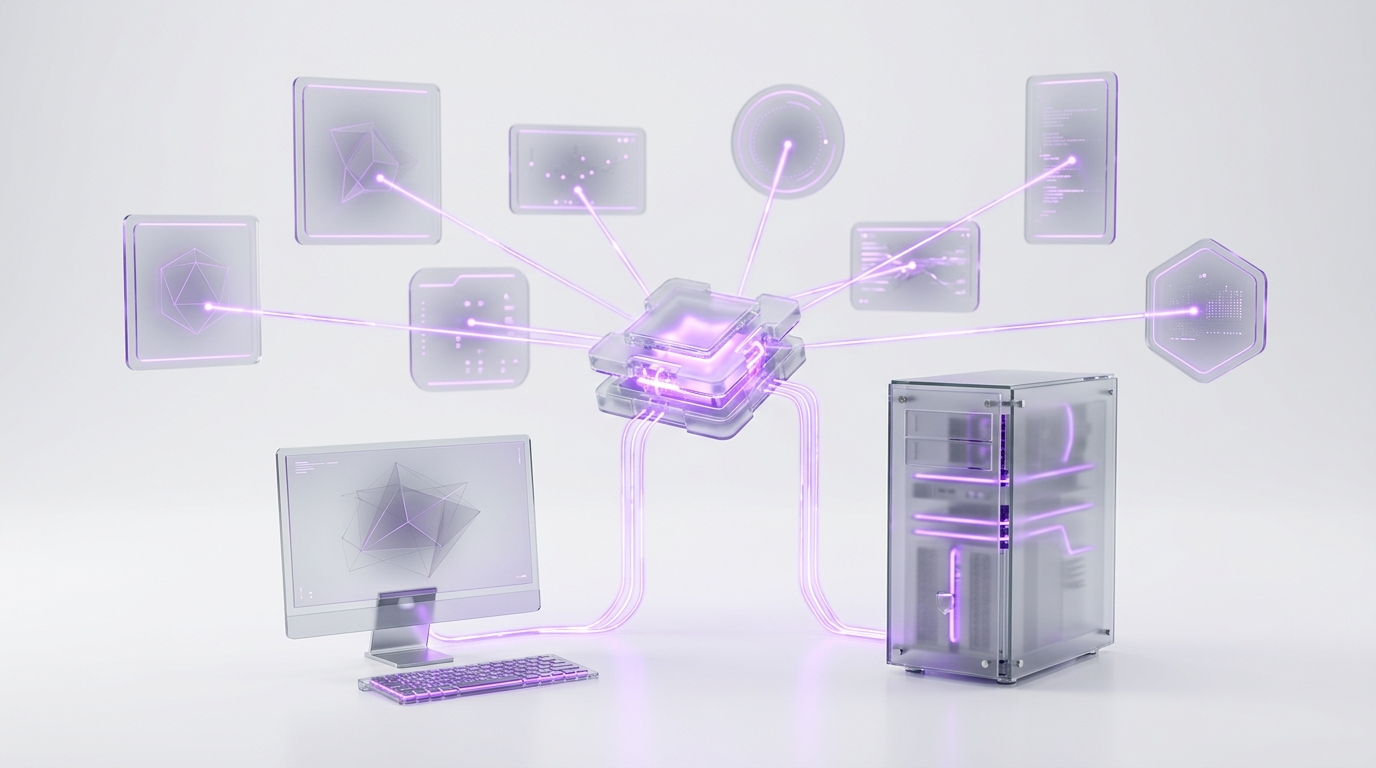
The practical path starts with one or two workflows, not a company-wide autonomy project. Morning briefing, inbox triage, research digests, or follow-ups. Small, frequent, and measurable. Then the logs prove value, and you expand with evidence instead of hope.
- 1Private install
OpenClaw deployed on a private VPS or your own locally hosted hardware. You own the data.
- 2Tool connections
Email, calendar, documents, and CRM connected with least-privilege scopes.
- 3Memory configuration
Scoped, inspectable memory so the system learns your context without hoarding it.
- 4Approval gates
Drafting runs freely. Sending, spending, and deleting wait for your sign-off.
- 5Logs and review
Every action recorded, so week-two tuning is based on evidence, not vibes.
This fit matters most for owners and executives who want control over data, credentials, and workflow behavior. If that is you, the deeper company-wide playbook is in The Ultimate OpenClaw Guide for Business Owners.
5 Questions to Ask Before Buying Anything Called Agentic AI#
Gartner tied those project cancellations to escalating costs, unclear business value, and inadequate risk controls. All three are avoidable if you ask the right questions before signing anything. Here is the filter.
| Question | Good answer | Red flag | ClearSetup approach |
|---|---|---|---|
| What goal does it own, and how do we know when it is done? | A bounded outcome with success criteria | "It handles everything" | One defined workflow with a measurable output |
| What tools, data, and credentials can it access? | A scoped list you can read and audit | Broad access "for flexibility" | Least-privilege connections per workflow |
| Which actions are automatic, and which need approval? | A written tier map with gates on risky steps | "Full autonomy out of the box" | Approval gates on sends, spends, and deletes |
| How does it log decisions and escalate uncertainty? | Complete logs plus explicit escalation rules | No audit trail to show you | Every action logged and reviewable |
| Where does memory live, and how is it deleted? | Inspectable, editable, removable, on your infrastructure | Opaque memory on someone else's servers | Memory on your private VPS or your own hardware |
Add one closer: what is the first measurable workflow, and how soon do we review results? Any vendor who cannot answer that in one sentence is selling you the word agentic, not the system.
How to Start With Agentic AI This Week#
The momentum is real. Gartner predicted that 40% of enterprise applications will include task-specific AI agents by the end of 2026, up from less than 5% in 2025. You do not need to move at enterprise speed, but you also do not need to wait. The starting sequence fits in a week.
Each weekday at 7am, read my calendar and unread email, then send me one prioritized plan for the day. Draft replies for routine messages but never send anything without my approval.Use OpenClaw when you want a flexible control plane for agentic workflows. Use ClearSetup when you want it designed, installed, connected, and guarded for you on a private VPS or your own locally hosted hardware, so week one is delegation instead of configuration. And if you prefer to assemble the whole system yourself, our guide on how to build an AI agent walks through it step by step.
Agentic AI: Frequently Asked Questions#
What is agentic AI in simple terms?
Agentic AI is AI that can work toward a goal across multiple steps. It can plan, use tools, check results, remember context, and adjust its next move instead of waiting for a human prompt at every step.
What does agentic AI mean?
The agentic AI meaning is AI with agency inside rules. It does not mean the AI is conscious. It means the system can act toward an approved outcome using allowed tools, memory, and workflow logic.
What is the difference between agentic AI vs generative AI?
Generative AI creates content, such as text, code, images, or summaries. Agentic AI uses models plus tools, memory, planning, and feedback loops to move a task or workflow toward completion.
Is agentic AI the same as an AI agent?
No. An AI agent is usually the software actor. Agentic AI describes the behavior or system pattern: goal-directed planning, tool use, action, iteration, and escalation. For the noun definition, read the AI agent guide.
What are agentic workflows?
Agentic workflows are structured multi-step processes where AI can choose branches, call tools, loop, pause for approval, and resume with state. They are the practical way businesses turn agentic AI into repeatable work.
What are good agentic AI examples for work?
Strong agentic AI examples include morning briefings, inbox triage, research digests, follow-up drafting, CRM updates, support routing, task management, and job-search assistance. The best ones start with low-risk drafts and approvals.
Does agentic AI need human approval?
For risky, expensive, public, sensitive, or irreversible actions, yes. Approval gates should sit before sending external messages, spending money, deleting data, changing permissions, publishing content, deploying code, or making customer commitments.
Can agentic AI run privately?
Yes, depending on the stack. ClearSetup focuses on private OpenClaw deployments on a private VPS or your own locally hosted hardware, with scoped permissions, logs, memory controls, and approval gates.
What makes an AI system truly agentic?
A system is truly agentic when it can understand a goal, plan steps, use tools, evaluate progress, remember useful context, recover from errors, and escalate to a human when risk or uncertainty is too high.
Why is agentic AI such a buzzword?
Because vendors use the term for everything from real agentic workflows to ordinary chatbots with better branding. The practical test is whether the system can complete bounded work safely, not whether the pitch sounds futuristic.
The Bottom Line on Agentic AI#
Strip the buzzword and agentic AI is a working pattern: AI with a job, tools, and rules, running a loop of plan, act, check, and remember, with approval gates where the risk lives. The shift it enables is real. You stop asking software for answers and start delegating bounded outcomes.
- Agentic AI is a system behavior, not a product: goal-directed planning, tool use, feedback, and iteration.
- Generative AI makes the draft. Agentic AI moves the workflow. An AI agent is the actor inside it.
- Agentic workflows beat rigid automation on judgment-heavy work, but only with logs, state, and approval gates.
- Gartner predicts over 40% of agentic AI projects will be canceled by end of 2027. Scope small, gate hard, measure weekly.
- Start with one bounded workflow, read-only first, and expand when the logs prove value.
ClearSetup can design and install OpenClaw on your private VPS or your own locally hosted hardware, connect the right tools, and configure approval gates so you stay in control. Book a free setup call and pick the first workflow to hand off.
Want your own OpenClaw AI agent, set up right?
We install, secure, and maintain your personal AI agent on private infrastructure, tuned to exactly how you work. You get the power without managing the setup.
Book Your Free Setup Call→The Owner's Guide to Adopting AI the Right Way
A short, practical guide for entrepreneurs: how to take charge of your AI, what your first AI agent should do, and the mistakes that cost months of rework. Get it free.